

 Contact Us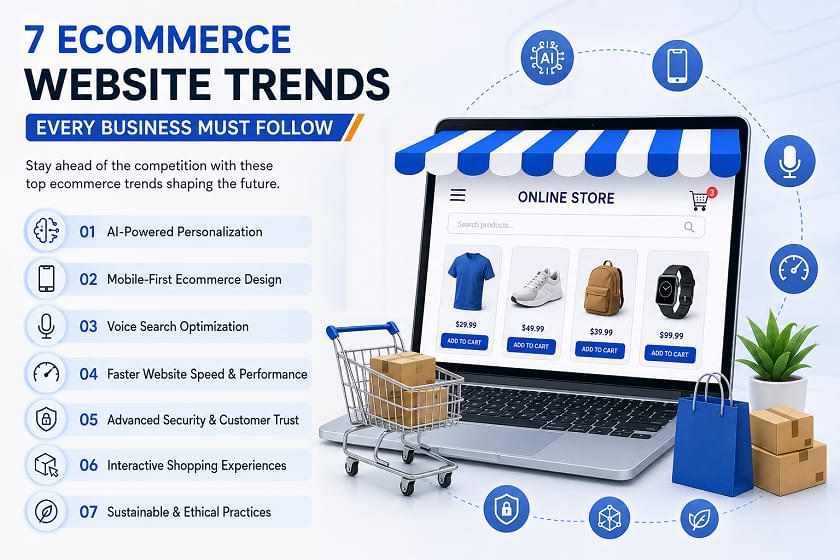
In today’s fast-moving digital marketplace, having an online presence is no longer optional. Businesses of every size are investing in ecommerce platforms to connect with customers, increase sales, and build stronger brands. However, simply launching an online store is not enough. Consumer expectations are changing rapidly, and businesses must keep up with the latest ecommerce website trends to stay competitive.
Whether you are a startup, a retail brand, or an established enterprise, understanding current ecommerce trends can help you create a better shopping experience and improve conversion rates. Companies looking for professional website solutions often partner with an experienced Ecommerce Web Design Company In Delhi to build modern, customer-focused online stores that deliver results.
Let’s explore seven ecommerce website trends that every business should follow in 2026 and beyond.
The Growing Importance of User Experience
Customer experience remains the most critical factor in ecommerce success. Modern shoppers expect websites to load quickly, look professional, and provide a smooth buying journey from start to finish.
A well-designed ecommerce website should make it easy for visitors to browse products, compare options, and complete purchases without confusion. Simple navigation, clear product categories, and intuitive layouts can significantly reduce bounce rates and improve customer satisfaction.
Businesses that prioritize user experience often see higher engagement levels and stronger customer loyalty because shoppers are more likely to return to websites that are easy and enjoyable to use.
1. AI-Powered Personalization
Artificial Intelligence is transforming how ecommerce websites interact with customers. Today’s shoppers expect personalized experiences that match their interests and purchasing behavior.
AI-powered systems analyze customer data to recommend relevant products, suggest complementary items, and create personalized shopping journeys. Instead of showing the same content to every visitor, ecommerce websites can deliver customized experiences based on browsing history, location, and previous purchases.
Personalization helps customers find products faster while increasing the likelihood of additional purchases. As AI technology continues to evolve, personalized shopping experiences will become a standard feature rather than a competitive advantage.
2. Mobile-First Ecommerce Design
The majority of online shoppers now use smartphones to browse and buy products. As a result, mobile-first design has become one of the most important trends in ecommerce website development.
A mobile-first approach means designing the website primarily for mobile users before adapting it for larger screens. This ensures faster loading times, better usability, and seamless navigation across devices.
Businesses that invest in responsive ecommerce websites can reach a larger audience and improve conversion rates. A trusted Web Design Company In Delhi understands the importance of creating mobile-friendly websites that deliver exceptional performance on every device.
3. Voice Search Optimization
Voice search is becoming increasingly popular as consumers use smart speakers, virtual assistants, and mobile voice commands to find products online.
Traditional keyword strategies are evolving because voice searches are often longer and more conversational. Ecommerce businesses need to optimize their websites for natural language queries and question-based searches.
For example, instead of typing “wireless headphones,” users may ask, “What are the best wireless headphones under ₹5000?”
Optimizing product pages, FAQs, and content for voice search can help businesses capture additional traffic and stay ahead of competitors as voice commerce continues to grow.
4. Faster Website Speed and Performance
Website speed directly impacts customer satisfaction and sales performance. Research consistently shows that users abandon websites that take too long to load.
Modern ecommerce websites focus heavily on performance optimization. This includes:
- Faster hosting infrastructure
- Optimized images
- Efficient coding practices
- Content delivery networks (CDNs)
- Reduced page complexity
A delay of even a few seconds can result in lost customers and lower search engine rankings. Businesses investing in professional Web Designing Services in Delhi NCR often prioritize speed optimization to improve both user experience and SEO performance.
Fast-loading websites not only attract more visitors but also encourage users to complete purchases without frustration.
5. Advanced Security and Customer Trust
Cybersecurity remains a top concern for online shoppers. Customers want assurance that their personal information and payment details are protected.
Modern ecommerce websites are implementing advanced security features such as:
- SSL certificates
- Secure payment gateways
- Two-factor authentication
- Fraud detection systems
- Data encryption
Trust signals such as verified payment options, customer reviews, and transparent policies also play an important role in building credibility.
Businesses that prioritize security create a safer shopping environment and strengthen customer confidence, leading to higher conversion rates and repeat purchases.
6. Interactive Shopping Experiences
Static product listings are being replaced by more engaging and interactive shopping experiences. Consumers want to visualize products before making purchasing decisions.
Popular interactive ecommerce features include:
- 360-degree product views
- Product videos
- Virtual try-on technology
- Augmented reality experiences
- Interactive product customization tools
These technologies help customers better understand products and reduce uncertainty during the buying process.
For example, furniture retailers can allow customers to see how products would look in their homes, while fashion brands can offer virtual fitting experiences. These innovations improve customer engagement and reduce return rates.
7. Sustainable and Ethical Ecommerce Practices
Consumers are becoming increasingly conscious of sustainability and ethical business practices. Many shoppers prefer to support brands that demonstrate environmental responsibility.
Ecommerce businesses are responding by:
- Using eco-friendly packaging
- Offering carbon-neutral shipping options
- Highlighting sustainable products
- Improving supply chain transparency
- Reducing waste in operations
Communicating these initiatives through ecommerce websites can strengthen brand reputation and attract environmentally conscious customers.
Sustainability is no longer just a corporate responsibility initiative; it has become an important factor influencing purchasing decisions across multiple industries.
Why Businesses Must Adapt to These Trends
The ecommerce landscape is evolving faster than ever before. Consumer expectations continue to rise as technology advances and competition increases.
Businesses that ignore emerging trends risk losing customers to competitors that provide better online experiences. On the other hand, companies that embrace innovation can improve customer satisfaction, increase sales, and strengthen their market position.
From AI-powered personalization and mobile optimization to enhanced security and interactive shopping experiences, each trend contributes to creating a more effective ecommerce platform.
Partnering with an experienced Ecommerce Web Design Company In Delhi can help businesses implement these modern features while ensuring long-term scalability and performance.
How Professional Website Development Makes a Difference
Building a successful ecommerce website requires more than attractive design. It involves strategic planning, technical expertise, search engine optimization, user experience design, and ongoing maintenance.
Professional developers understand how to combine functionality, performance, and design to create ecommerce websites that support business growth. Whether you need a new online store or want to upgrade an existing platform, expert guidance can help you stay aligned with industry trends.
Choosing reliable Web Designing Services in Delhi NCR ensures your website remains competitive, secure, and optimized for future growth opportunities.
Conclusion
Ecommerce continues to reshape how businesses connect with customers and generate revenue. As technology evolves, businesses must adapt to changing consumer expectations and emerging digital trends.
The seven trends discussed above—AI-powered personalization, mobile-first design, voice search optimization, faster website performance, enhanced security, interactive shopping experiences, and sustainability—are shaping the future of online commerce.
Organizations that embrace these trends today will be better positioned to attract customers, improve conversions, and achieve long-term success. Working with a trusted Web Design Company In Delhi can provide the expertise needed to build a future-ready ecommerce platform that delivers exceptional results in an increasingly competitive market.